One person wants a quiet room after dinner. Another would like a table for breakfast before everyone else wakes up. And the person managing the bags wants the next train journey to be simple. Those are three different accommodation needs, even when everyone is taking the same Tokyo trip.
If you are choosing between Tokyo Station and Asakusa for spring 2027, use two concrete examples: karaksa hotel TOKYO STATION and MIMARU Tokyo Asakusa Station. The useful comparison is how each room arrangement supports your group’s ordinary mornings, evenings and travel days.
The short answer
Start with karaksa if separate sleeping spaces and onward rail travel are your priorities. Start with MIMARU if you will use a kitchen and dining area. Then check the exact beds, room separation and route for your dates. Neither choice fits every group.
Tokyo Station or Asakusa: what are you trying to make easier?
| Your priority | karaksa: Tokyo Station | MIMARU: Asakusa Station |
|---|---|---|
| Different bedtimes | Bookable connecting-room options; confirm the combination | Choose the actual bedroom layout; the standard Family Apartment is a shared room |
| Flexible meals | Check the hotel’s current café arrangements and nearby options | Kitchen and dining area in every room |
| Next stop elsewhere in Japan | Worth comparing when your next train leaves Tokyo Station | Include the journey to your departure station |
| Time close to Asakusa | Allow for the trip to and from the neighbourhood | A base for nearby outings; busy spring periods still need a plan |
| A firm booking decision | Confirm the internal connection and all beds | Confirm bunk-bed users and bedroom separation |
These are planning judgments, rather than an overall ranking. A useful base removes the compromises your group is least willing to make. For a wider area search, see our guide to five Tokyo areas.
First compare sleeping spaces, rather than the guest count
 Emma
There are four of us. Can we just compare the rooms that say “four guests”?
 Minamina
Use that as a starting filter. Then give every person an actual bed and decide which lights can stay on after someone goes to sleep.
At karaksa, the Family Quadruple is 29.2 m² with two single beds, an extra bed and a sofa bed. Its shower booth, wash area and toilet are separate. That is a different proposition from two connected rooms: four guests still share one sleeping space.
The hotel also lists connected Standard Twin with Sofa rooms for four and connecting options for up to six. Its connecting-room information describes internal doors and two bathrooms. Check which beds your selected combination uses; additional guests may mean sofa beds.
MIMARU’s official room guide lists a 35 m² Family Apartment with two single beds and one bunk bed. Its 52 m² One-Bedroom Apartment has four single beds and one bunk bed. The 71 m² Deluxe Two-Bedroom Suite has four singles, two bunk beds, two toilets, a bathroom and a shower room.
More floor area does not promise more privacy
A dining table is useful, but it does not establish a separate sleeping area. Study the floor plan for the room category you will actually reserve. Ask where someone can sit with the lights on after the earliest bedtime.
For a group of six, compare the bedroom split and the people using sofa beds or bunks before comparing the total price. For a larger party, compare one larger apartment with multiple rooms. Maximum occupancy alone cannot tell you whether the arrangement is comfortable for your group.
A kitchen matters when it changes the morning
 Marcus
We are planning to eat out. Would an apartment kitchen still make a difference?
 Minamina
It might if breakfast happens at different times. Think about a normal morning: who wants food first, and where will the others sit while they get ready?
MIMARU lists a kitchen and dining area in every room, with a refrigerator, microwave, IH stove, cookware and tableware. That can support a simple breakfast or food brought back for dinner. It also means the group has somewhere to sit together inside the accommodation.
The practical question is whether you will use those features. If everyone wants to leave together for breakfast, paying for an apartment arrangement may solve less than you expect. A larger room can still be the wrong choice if the sleeping setup causes friction every night.
karaksa’s facilities page lists a café that also serves as guest free space outside breakfast hours. Check current hours and access conditions. A shared hotel space can help people wait or regroup, but it does not give you a private dining area inside your room.
Compare a complete evening
Picture one person resting, another eating and someone else preparing for tomorrow. Choose the arrangement that lets those activities coexist without asking the whole group to do the same thing.
Use the journey you will actually make
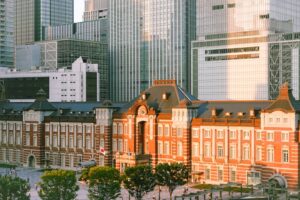
karaksa’s access page gives a five-minute walk from Tokyo Station. That is a station-to-hotel guide, rather than the full time from every arriving platform. Use JR East’s Tokyo Station maps to trace your route through the station, then the final walk.
MIMARU lists a one-minute walk from Asakusa Station’s Tokyo Metro Ginza Line Exit 4, or two minutes from Toei Asakusa Line Exit A5. An advertised short walk does not establish a step-free route from your train. Use the hotel’s access information alongside the relevant operator’s station information.
If lifts matter, start with Tokyo Metro’s facility search and check the actual route. The exit nearest the hotel may differ from the exit you need with bags or a pushchair.
| Journey to compare | What to write down |
|---|---|
| Arrival with luggage | Arrival station, platform-to-exit route, final walk and bag-storage plan |
| A typical sightseeing day | Where most outings begin and how someone returns alone |
| Departure from Tokyo | Departure station, changes, bags and enough time to regroup |
A Tokyo Station base is a sensible shortlist when it simplifies a booked onward journey. An Asakusa base can be a better shortlist when you want repeated local outings and easy returns to your accommodation. Treat those as itinerary-dependent choices: neither hotel removes the need to travel across Tokyo.
For spring 2027, include the crowd plan
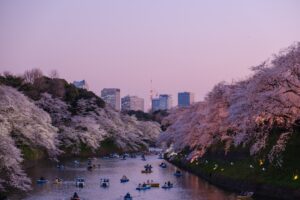
A spring stay in Asakusa puts Sumida Park within the neighbourhood, but popularity is part of the trade-off. GO TOKYO describes the park as especially busy during cherry-blossom festival season. Proximity can help you break an outing into smaller parts; it cannot guarantee a calm street or a quiet room.
Do not build a booking around an assumed 2027 full-bloom day. Keep the hotel choice useful even if the blossoms arrive earlier or later than you hoped. If your trip extends into late April or early May, JNTO’s May guide warns that Golden Week is a busy period for trains and hotels and advises early booking.
Keep the reservation useful if plans change
Compare cancellation deadlines, the full cost for the party and the exact room arrangement. A flexible rate can be worth considering while flight and rail plans are still being settled. Availability, rates and 2027 bloom timing are not confirmed by this guide.
Which would I shortlist for this group?
 Lucas
We like both. What should settle the decision?
MinaminaChoose the compromise you can live with. If sleep separation is essential, confirm that first. If shared meals at your own table will shape every day, give that more weight.
- Shortlist karaksa: your priority is a confirmed connecting setup, you can accept the actual beds, and Tokyo Station access helps a real travel day.
- Shortlist MIMARU: your group will use a kitchen and table, the chosen bedroom layout works, and everyone assigned a bunk is happy to use it.
- Keep searching: neither room arrangement protects the sleep, privacy or access conditions your group needs. A hotel’s family label does not settle those questions.
For the individual property checks, read our karaksa hotel TOKYO STATION guide and MIMARU Tokyo Asakusa Station guide. For arrival day and time apart, use the Tokyo stay-planning checklist.
Before paying, confirm these details
- Every traveller has an agreed bed, including any bunk, extra bed or sofa bed.
- The connecting door or bedroom division is part of the confirmed room category.
- The bathroom arrangement and route meet the group’s specific requirements.
- The total price covers the correct party, dates and any extra charges.
- Cancellation deadlines, luggage storage and check-in arrangements are understood.
- Everyone has the hotel address and a workable return route if plans split.
If karaksa remains on your shortlist, compare the room listing and terms for your dates on Klook. This affiliate option does not imply that it is cheaper than direct booking or that the required room combination is available. For MIMARU, use its official room and booking information linked above.
The better choice is the one that makes your shared trip easier on an ordinary day. Confirm the room first, test the travel days, then build the sightseeing plan around the freedom you have left.
Sources and scope
Official hotel, transport and seasonal information checked on 15 October 2026. Linked sources above support the stated facilities and location details. Suitability recommendations are AGI’s editorial judgments. Live room availability, prices, connecting-room confirmation, individual access needs and future blossom timing require checks for your own booking.