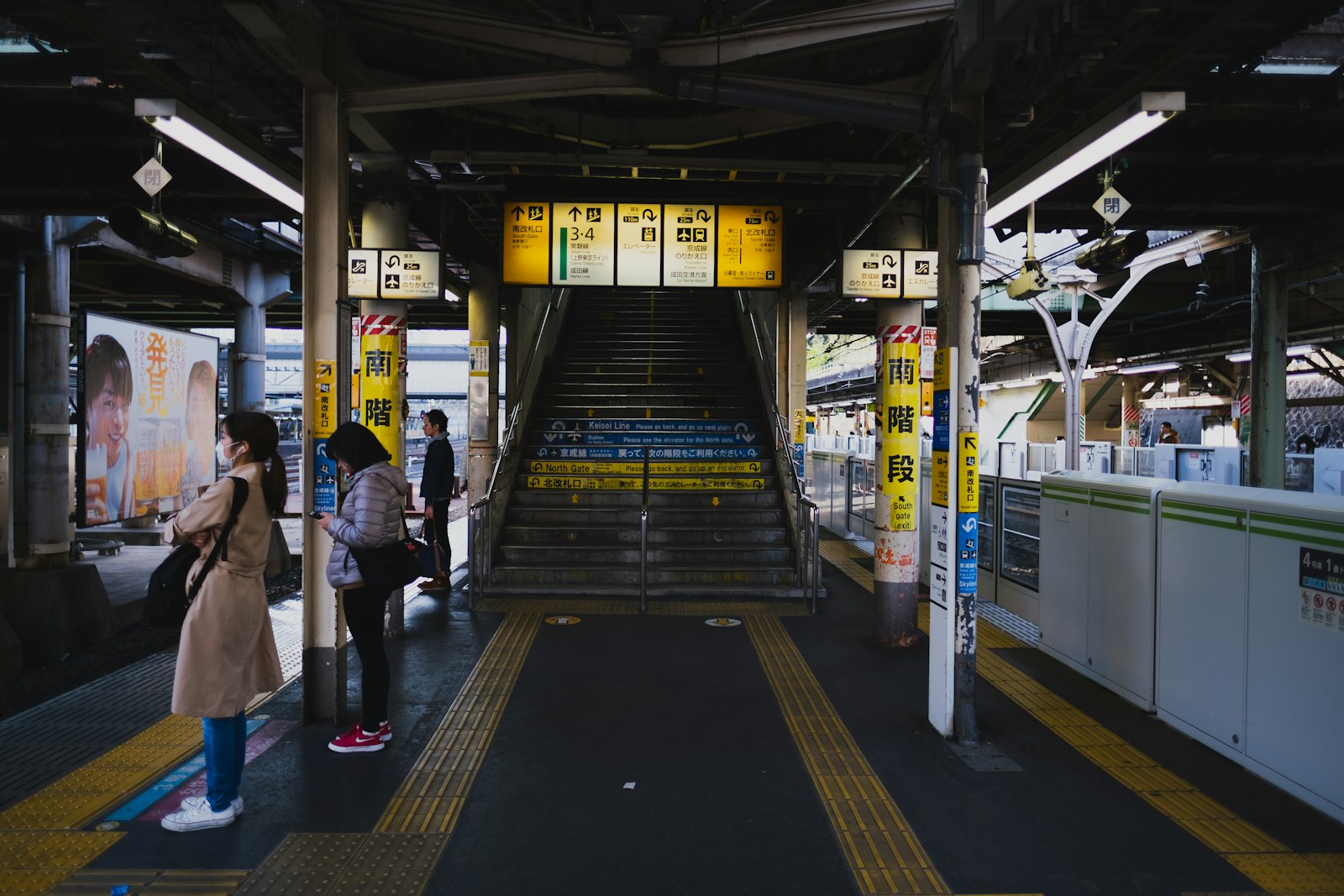
A quick train ride can still leave a family with a long interchange, the wrong side of a main road or an entrance that does not suit the day. For a Tokyo trip together, compare the journey all the way to the place you want to visit.
The short conversations below are editorial planning Q&A, not traveler testimonials.
Choose a workable platform-to-door route first. Then compare train time, walking, changes and cost.
 Emma
If the station has an elevator, is the route settled?
 Minamina
Check both sides of the ticket gate and the exact line and direction. One elevator symbol does not describe every connection you need.
Build the journey in three parts
Trace the walk to the departure entrance, including crossings and any luggage you will carry.
Check the platform, ticket gate and any transfer corridor. Ask the operator if a required connection is unclear.
Save the street-level exit and continue to the venue’s usable entrance. Check the return journey separately.
Tokyo Metro’s facility search separates elevators inside and outside the gate. Its “One-route” category means at least one ground–gate–platform connection using specified facilities; it can include a slope, stairlift or wheelchair-accessible escalator, as well as an elevator.
Use Ueno as a checking example
The official Ueno station page lists different facilities for the Ginza and Hibiya lines. Under the Ginza Line, it lists the Ueno Park District Gate–Exit 5a connection and a separate JR Ueno Station Gate–elevator-only exit connection, the latter with hours of 7:30–22:00.
For the visit itself, use our Ueno museum guide to choose by interest and agree on a meeting plan. Treat the walk to that meeting point as part of the decision.
Compare routes by the effort they ask for
| Option | Useful when | Check before choosing |
|---|---|---|
| Faster ride with a transfer | The connection works for everyone | Corridor length, level changes and platform access |
| Direct ride with more time on board | Avoiding a change matters more | The actual departure and arrival entrances |
| Different arrival station | Its usable exit better suits the destination | The whole street route, crossings and return option |
EmmaShould we always choose the route with fewer changes?
MinaminaNo. Compare the whole journey against what each person needs that day. Fewer changes can help, but a long final walk may outweigh that benefit.
Ask about walking, standing, stairs, luggage and the wish to travel together. Do not use age as the answer. If the group separates, agree on an exact reunion point and ensure each group can navigate, communicate and manage any supervision needs.
Choose the ticket after the route
The official Tokyo Subway Ticket page describes validity on Tokyo Metro and Toei Subway lines. Do not treat that as coverage of every railway in Tokyo. Check eligibility, the exact ticket format and current purchase conditions before paying.
EmmaShould a pass decide which route we take?
MinaminaStart with the journeys you would comfortably choose. Compare their fares and conditions with the pass; do not add unwanted transfers simply to use it.
Check official Tokyo Subway Ticket conditions
Save a route card before leaving
- Departure station, operator, line and direction.
- Platform-to-gate and gate-to-street connections, with any operating hours.
- Exact exit and destination entrance, including the street walk.
- Return route and an alternative if a required facility is unavailable.
- Meeting point and a contact plan if travelling separately.
For a base that supports repeated journeys, compare our Tokyo area guide with your actual entrances and daily plans. “Near a station” is a starting point for research, not the end of it.