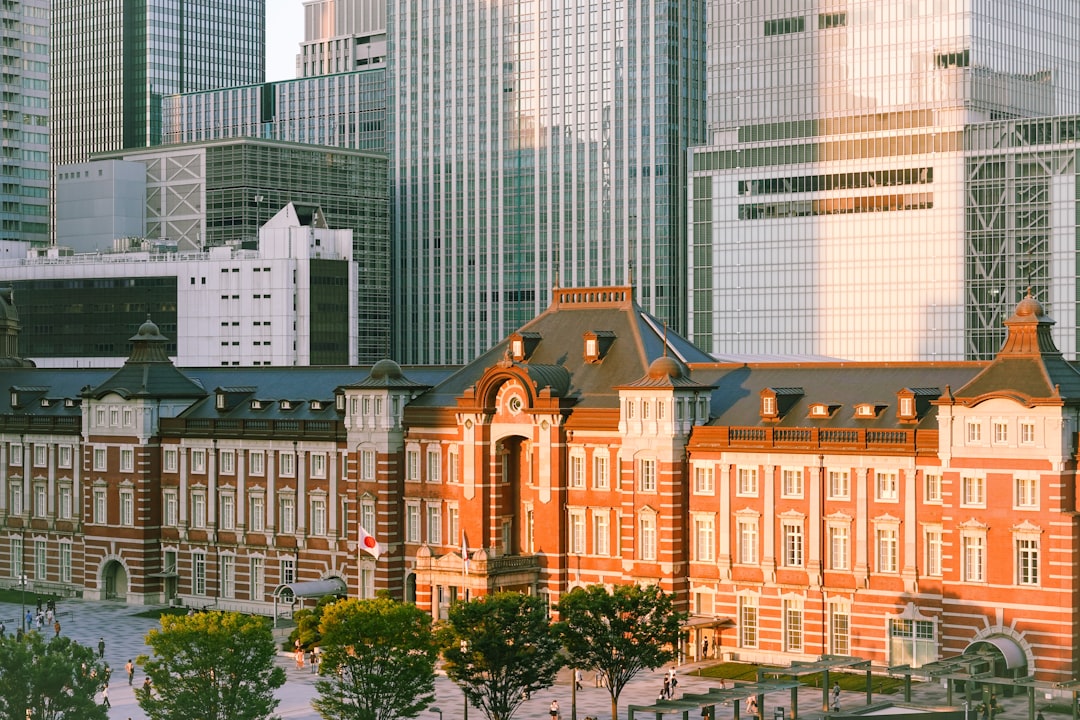
On a map, staying nearby looks like a simple convenience. In practice, it can change how a multi-generational trip feels: fewer transfers with luggage, easier day trips, and a realistic way for one person to head back early without pulling everyone else out of the plan.
karaksa hotel TOKYO STATION sits on the Yaesu side of the station. The hotel’s official access guide places it about five minutes on foot from the Yaesu North Exit, and its room mix includes connecting rooms, family rooms and an accessible room. That combination makes it worth a closer look for groups traveling with different sleep patterns, luggage needs and daily energy levels.
At a glance
| Best fit | Groups that value Tokyo Station access, separate sleeping space and simple onward travel |
|---|---|
| Useful room feature | Connecting rooms for up to six guests, with two bathrooms |
| Family-room option | Family Triple and Family Quadruple rooms at 29.2㎡ |
| Practical extras | Luggage storage, laundry, nursing room, café/free space and free drinks after breakfast hours |
| Main trade-offs | Many rooms use shower booths rather than bathtubs; standard rooms are compact by international expectations |
AGI Note: The strongest reason to consider this hotel is not that it is “family-friendly.” It is that the room layouts and Tokyo Station location can reduce the number of compromises a mixed group has to make.
Why the Tokyo Station location matters more in winter
For travelers planning Tokyo between December and February, the location becomes especially useful. GO TOKYO notes average winter temperatures around 6–9°C, with colder conditions at night and in the shade. Snow is possible but not common. A short walk back from the station will not remove winter weather from the trip, but it can make the final part of a long sightseeing day simpler when the group is tired or carrying bags.
There is one important detail: “five minutes from Tokyo Station” is not the same as “five minutes from every platform.” Tokyo Station is large. If your group is arriving by shinkansen, Narita Express or a local JR line, allow time for the walk through the station itself before you reach the Yaesu North Exit.
The connecting rooms are the most interesting option for different travel rhythms
The official hotel site says its connecting rooms join two adjacent rooms with an internal door and provide two bathrooms. Depending on the combination, connecting setups can accommodate up to six guests. The inner door can also be closed at night.
That sounds like a small design detail, but it solves several problems that appear quickly when different generations travel together. Someone can go to bed early without forcing the entire group into silence. Two bathrooms reduce the morning bottleneck. Children can be nearby without everyone sharing one open sleeping space. And if one person needs quiet time during the day, the group does not necessarily have to split across separate floors.
A family-of-four trip report on Reddit described the hotel as spacious and especially convenient because of its proximity to the station. Recent OTA reviews also repeatedly mention the connecting-room configuration as useful for families and groups. Those are experience signals rather than guarantees, but they line up with the room design shown on the hotel’s own site.
Family Triple and Family Quadruple: check the actual bed setup
The Family Triple is 29.2㎡ with two 110cm-wide single beds and one 100cm-wide extra bed. The Family Quadruple is also 29.2㎡, adding a 90cm-wide sofa bed to two single beds and an extra bed. Both layouts separate the shower booth, wash area and toilet so more than one person can get ready at the same time.
For four adults, however, “sleeps four” and “four equivalent beds” are not the same thing. Before booking, look at who will use the extra bed or sofa bed. If everyone strongly prefers a standard-height conventional bed, two connected rooms may be a better fit than putting four people into one Family Quadruple.
Japanese Family Rooms can be appealing—but futons are a real preference question
The hotel also offers Japanese Family Rooms with futon bedding. These rooms are larger than many of the standard rooms, but the floor-level sleeping style is not automatically easier for every traveler. Some people enjoy the extra floor space and traditional feel; others may prefer a raised bed because getting down to and up from the floor is uncomfortable.
This is exactly the kind of choice that is better made around individual habits than age. Ask the person who will actually sleep there.
One accessible room is available, but confirm the details that matter to you
The official room list includes one Accessible Room at 22.3㎡ with a 140cm-wide double bed and a barrier-free layout. Because there is only one such room, availability may be limited. If step-free access, bathroom configuration, turning space or a specific mobility requirement matters to your trip, confirm those details directly with the hotel rather than assuming the room label covers every need.
The café and free space are more useful than they first sound
The first-floor 8SYAESU Café serves a light buffet breakfast from 7:00 to 9:30, with last entry at 9:00. The hotel currently lists breakfast at ¥1,000. From 10:00 to midnight, the café becomes a free space for hotel guests with complimentary drinks.
For a group that does not move at the same pace, that shared space can be genuinely useful. One person can sit downstairs while others finish getting ready. Someone who returns early has somewhere to pause outside the room. And on a cold winter evening, the group can regroup without immediately committing to another restaurant or train ride.
The hotel also lists a 24-hour nursing room for guests with small children, with a changing table, chairs, diaper disposal and baby-bath items. Laundry facilities and vending machines are available elsewhere in the building.
Luggage handling is a quiet advantage near a major rail hub
The hotel says guests can leave luggage at the front desk before check-in and after check-out, with after-checkout bags collected the same day unless another reservation is in place. It also accepts luggage sent ahead when properly labeled.
That matters if Tokyo is only one stop in a longer Japan trip. A Tokyo Station base works best when it actually makes the transition to Kyoto, Osaka, Nagano or another destination easier—not simply because the station name looks convenient on a booking map.
What may not work for your group
- You want a bathtub every night. Many room types use a shower booth. Check the exact room before booking.
- You want a large resort-style room. Standard rooms are a little over 21㎡, so large suitcases can change how spacious the room feels.
- Your Tokyo plans are concentrated in western neighborhoods. Shinjuku or Shibuya may reduce daily cross-city travel if most of your itinerary is there.
- Your group prefers a full-service hotel experience. This is a practical city base rather than a property built around extensive in-hotel dining or leisure facilities.
- Everyone wants the same type of bed. Family-room capacities can involve extra beds, sofa beds or futons. Read the room diagram, not only the guest count.
Reported guest impressions: convenience is the recurring theme
Across recent guest reviews, the location and room configuration come up repeatedly. A 2026 Trip.com reviewer staying in connecting rooms described the location as convenient and the connecting setup as comfortable for the group. Klook reviews from 2026 similarly mention the connecting rooms and the downstairs seating/free-drink area as useful during family stays.
There are also reminders not to over-romanticize the location. Some guests mention limited floor space once large luggage is opened. That is worth keeping in mind if your trip involves several full-size suitcases or a longer stay where everyone wants to unpack.
Who this stay may suit
- Families or groups that want connecting rooms rather than one large shared room
- Trips using the shinkansen or Tokyo Station for onward travel
- Groups where one person may return to the hotel earlier than the others
- Travelers who value two bathrooms more than a large lobby or extensive hotel facilities
- Winter trips where reducing the final outdoor walk of the day has practical value
Things to double-check before booking
- The exact bed type for every traveler—not only the room capacity
- Whether your chosen room has a shower only or the bathing setup you want
- Which connecting-room combination you are reserving
- Whether accessible-room features match your specific needs
- How your arrival route leads to the Yaesu North Exit
- Current breakfast hours, room policies and child rates before payment
AGI Note: karaksa hotel TOKYO STATION makes the strongest case for itself when your group cares about logistics: getting in, getting out, sleeping separately when needed and keeping the morning routine moving. If the hotel itself is meant to be a major part of the holiday, the trade-offs deserve a closer look.
Sources checked
- karaksa hotel TOKYO STATION — official site and access
- karaksa hotel TOKYO STATION — official room guide
- karaksa hotel TOKYO STATION — facilities and services
- GO TOKYO — Tokyo Winter Guide
- Reddit r/JapanTravel — family trip report mentioning karaksa hotel TOKYO STATION
- Trip.com — guest reviews
Featured image: photo by kiki on Unsplash. This article is an independent editorial review based on official hotel information and publicly available traveler reports. AGI has not claimed a personal stay at this property.